
Home Workouts
NHS Strength and Flex at Home: The 15 Videos and a Weekly Routine
Nov
What does the NHS Strength and Flex plan actually involve, and can it be followed in a small home gym? The NHS publishes a set of 15 short how-to videos for the plan, presented by Laura from the NHS Couch to 5K programme, covering a warm-up, posture, strength moves and stretches. Alongside them, its guidance on improving strength and flexibility sets out how often and how hard to work. This guide puts the two together into a practical way of running the plan at home.
Step 1: Check the plan suits you
Each Strength and Flex video carries the same safety information. The NHS says the exercises in the series are suitable for most people in good health with a reasonable level of fitness, and that unless stated otherwise they are general exercises, not aimed at treating any specific cause of pain or condition.
It advises getting advice from a healthcare professional, such as a GP, before trying them if:
- it is unclear whether the exercises suit current fitness;
- there is a health problem, an injury, any symptoms, feeling unwell, or a recent health event such as a heart attack or operation;
- there are any other concerns about health;
- the person is pregnant or has recently given birth.
The NHS also says to stop immediately if any pain or illness is felt, and to get help from 111 online or by calling 111 if symptoms are concerning or do not go away.
Step 2: Know the 15 videos
The NHS page lists the videos in this order:
- Warm-up
- Posture
- Standing press-up
- Thigh stretch
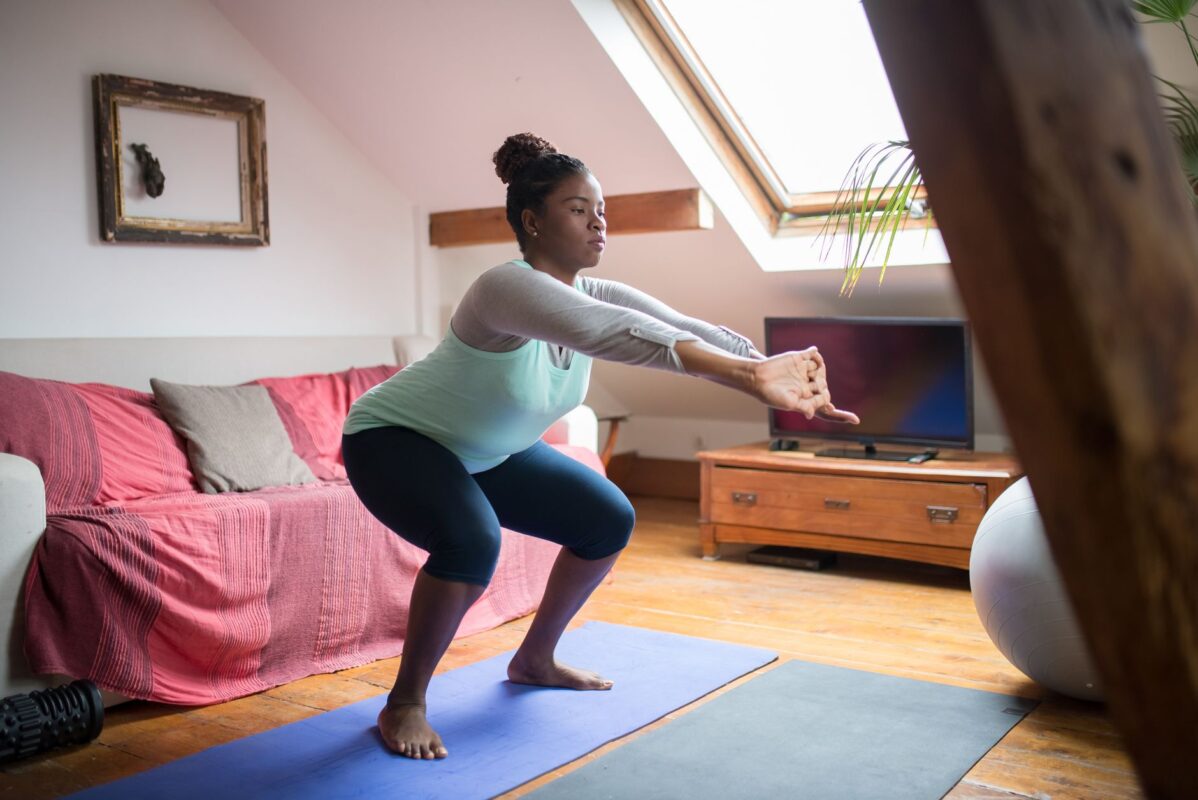
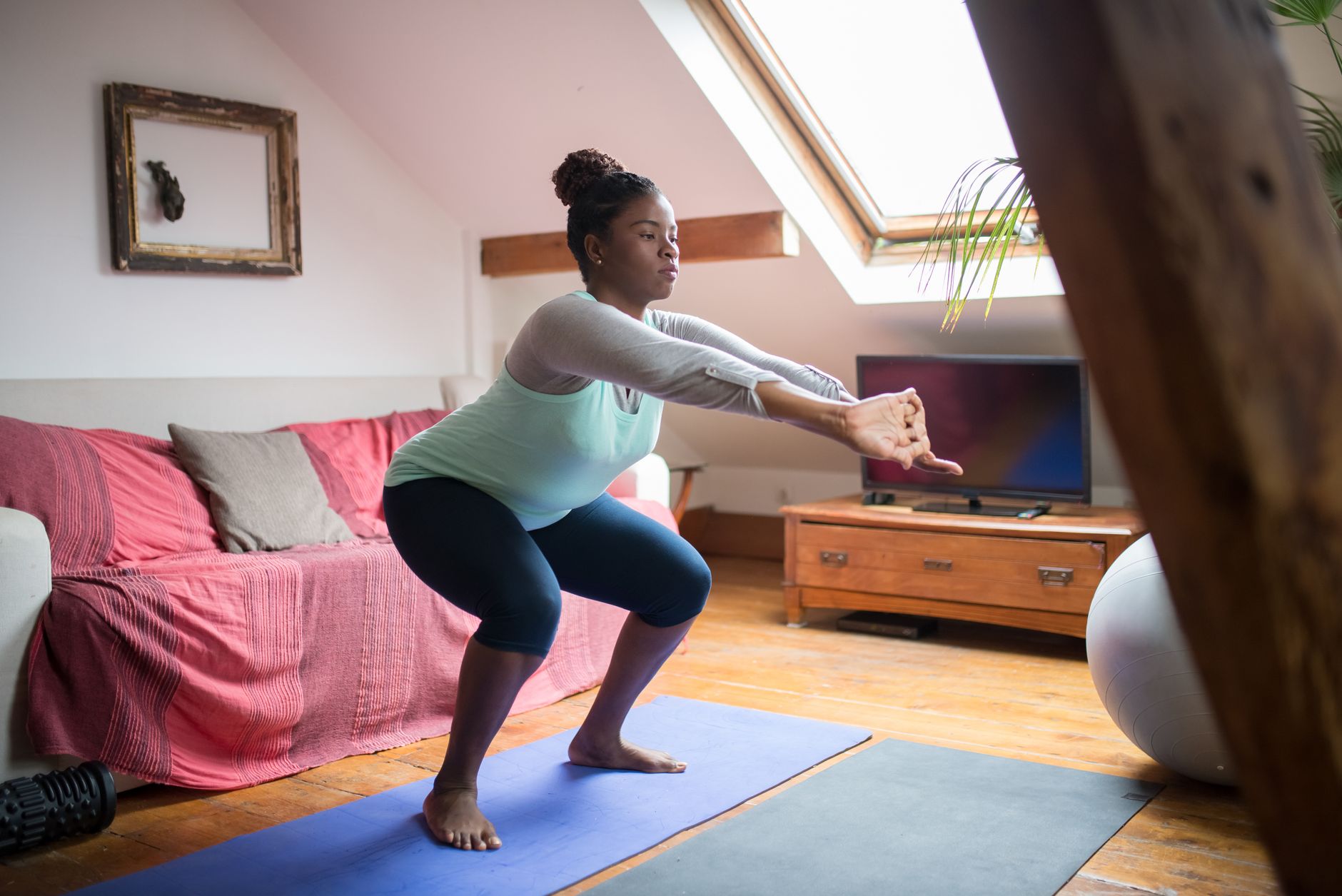
- Squat
- Calf stretch
- Chest stretch
- Upper back stretch
- Tricep stretch
- Sit to stand
- Wide squat
- Pull-up
- Bench dip
- Wide pull-up
- Sit to stand with calf raise
The videos were last reviewed in April or May 2025, with the next reviews due in 2028. Watching the relevant clip before each new exercise shows how the NHS presenter sets it up, including any support or surface it uses.
Step 3: Clear a space that suits the moves
The NHS page does not publish an equipment list, so the videos themselves show what each move involves; several names, such as sit to stand and bench dip, describe the support involved. For the floor and mats, the site’s guides on choosing home-gym flooring and a minimal yoga and mobility set-up cover the basics. For the pull-up and bench dip in particular, the set-up shown in the NHS video is the reference to follow before adapting the move to home-gym kit.
Step 4: Set the weekly dose
The NHS guidance on strength and flexibility says to do muscle-strengthening activities that work all the major muscle groups (legs, hips, back, abdomen, chest, shoulders and arms) on at least 2 days a week. Its detail on effort and volume is:
- work to the point where it would be difficult to do another repetition without help;
- try to do 8 to 12 repetitions of each activity, which counts as 1 set;
- try to do at least 2 sets, or 3 sets for even more benefit;
- start gradually and build up over a period of weeks.
The same page says there are no specific recommendations for how much time to spend on strength and flexibility exercises. It also explains how the strength days fit with aerobic activity: for general health, aim for at least 150 minutes of moderate-intensity aerobic activity a week plus muscle-strengthening on 2 days, or 75 minutes of vigorous-intensity activity, which the NHS says can cover the week’s aerobic and muscle-strengthening requirements. Time spent on strength exercises does not count towards the moderate aerobic minutes. The wider guidelines are covered in how much strength training adults need.
Step 5: Build a session from the list
Following the order of the NHS list, a session starts with the warm-up and posture videos and then moves through the strength exercises and stretches. Applying the NHS guidance, each strength exercise is done for 8 to 12 repetitions per set, for at least 2 sets, on at least 2 days a week.
To make the work harder over time, the NHS principle is to keep working to the point where another repetition would be difficult without help. The site’s guide to progressive overload at home explains ways to do that once the bodyweight versions feel easier, and a 3-day beginner split is the next step for anyone ready for more.
Common mistakes to avoid
- Skipping the warm-up video, which the NHS places first in the series.
- Stopping well short of effort: the NHS describes muscle-strengthening work as working muscles to the point where a short rest may be needed before continuing.
- Counting strength sessions towards the 150 aerobic minutes, which the NHS says they do not.
- Carrying on through pain; the NHS safety note says to stop immediately.
The bottom line
NHS Strength and Flex is a series of 15 free how-to videos, from a warm-up and posture check to squats, pull-ups, bench dips and stretches, suitable according to the NHS for most people in good health with reasonable fitness. Run at home, it needs a clear floor and stable surfaces, and the NHS guidance sets the dose: all major muscle groups on at least 2 days a week, 8 to 12 repetitions per set and at least 2 sets, built up gradually. Anyone with a health condition, injury or recent health event should check with a GP first.
Sources
- Strength and Flex exercise plan: How-to videos, NHS, videos last reviewed April and May 2025, read 18 November 2026 (nhs.uk)
- How to improve your strength and flexibility, NHS, read 18 November 2026 (nhs.uk)
